

Hey there! I'm a supplier of Conical Tank Heads, and today I wanna chat about the surface roughness requirements for conical tank heads in some applications.
First off, let's understand what surface roughness is. In simple terms, it's all about how smooth or rough the surface of the conical tank head is. It's measured by how far the surface deviates from a perfectly smooth plane. This might seem like a small detail, but it can have a huge impact on the performance and usability of the tank head in different applications.
Applications in the Food and Beverage Industry
In the food and beverage industry, the surface roughness of conical tank heads is super important. Think about it – these tanks are used to store and process things we're gonna eat and drink. So, we need the surface to be as smooth as possible. A rough surface can trap food particles and bacteria, which can lead to contamination. And that's a big no - no in this industry.
For food - grade conical tank heads, the typical surface roughness requirement is around Ra 0.8 to 1.6 micrometers. Ra is a common way to measure surface roughness. A lower Ra value means a smoother surface. When the surface is this smooth, it's a lot easier to clean the tank head. You can use standard cleaning methods like CIP (Clean - in - Place) systems, and they'll do a great job of getting rid of any leftovers.
If you're in the food and beverage business, you might also check out our Dished Heads. They're also made with high - quality standards and can be used in similar applications.
Applications in the Pharmaceutical Industry
The pharmaceutical industry has even stricter requirements for surface roughness. Medicines are extremely sensitive, and any contamination can be dangerous to patients. So, the conical tank heads used here need to be almost flawless.
The surface roughness requirement for pharmaceutical conical tank heads usually goes down to Ra 0.4 micrometers or even lower. Achieving this level of smoothness is no easy feat. We use special manufacturing processes like precision machining and high - quality polishing to get there.
When the tank head has such a smooth surface, it reduces the chances of particles sticking to it. And during the manufacturing of pharmaceuticals, any stray particle can mess up the whole batch. So, this smoothness is crucial for product quality and safety. If you're looking for other types of tank heads for your pharma needs, take a look at our Stainless Steel Dished Heads. Stainless steel is great because it's corrosion - resistant and can meet the high - hygiene standards of this industry.
Applications in the Chemical Industry
The chemical industry is a bit different. Here, the surface roughness requirements depend on the type of chemicals being stored in the conical tank heads. Some chemicals are very corrosive, and a rough surface can accelerate the corrosion process.
For corrosive chemicals, a smoother surface (Ra around 1.6 micrometers) is preferred. A smooth surface reduces the contact area between the chemical and the tank material, which slows down corrosion. On the other hand, for some non - corrosive chemicals, the requirements might not be as strict.
Another factor to consider in the chemical industry is abrasion. Some chemicals or the way they're handled can cause abrasion on the tank head surface. So, a certain level of smoothness can also help reduce wear and tear. If you think you might need other types of tank heads for your chemical applications, our Pressed Tank Heads are worth considering. They're strong and can be made to meet various requirements.
Manufacturing Processes to Achieve the Right Surface Roughness
As a supplier of conical tank heads, we use different manufacturing processes to meet the surface roughness requirements. For lower roughness values, we often start with precision machining. This involves using advanced CNC (Computer Numerical Control) machines to shape the tank head with high accuracy.
After machining, we perform polishing. There are different polishing methods, like mechanical polishing and electropolishing. Mechanical polishing uses abrasive materials to smooth the surface, while electropolishing uses an electrochemical process. Each method has its own advantages, and we choose the one that's best for the specific requirements.
Sometimes, we also use finishing treatments to enhance the surface properties. For example, passivation in the case of stainless steel conical tank heads. This treatment helps to form a protective layer on the surface, which can improve corrosion resistance and also maintain the smoothness.
Importance of Testing and Quality Control
We don't just make the conical tank heads and send them out. We have a strict testing and quality control process in place. We use specialized equipment to measure the surface roughness. Tools like profilometers can accurately measure the Ra value and other surface roughness parameters.
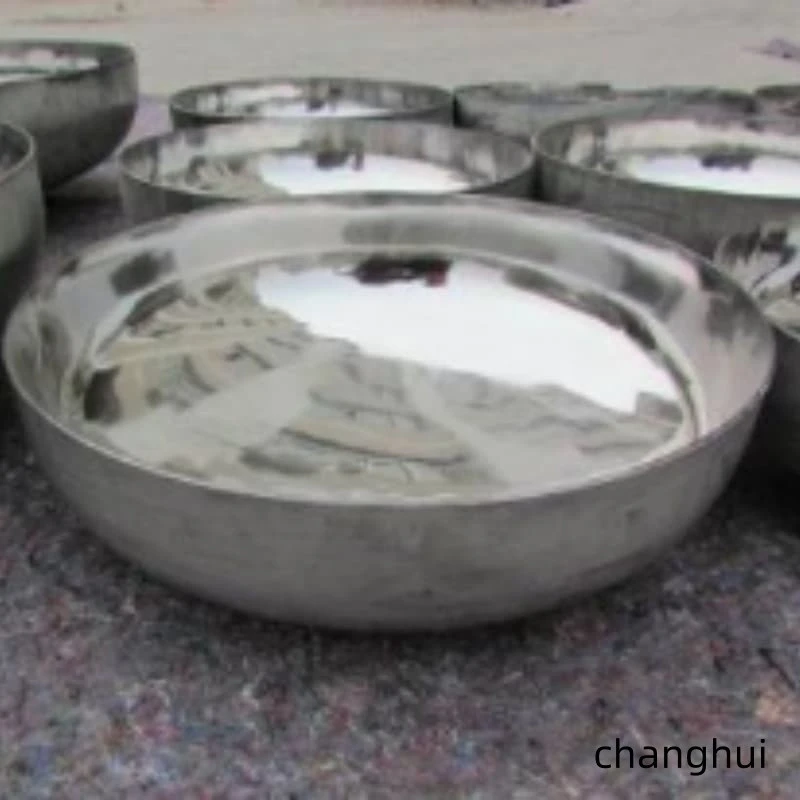
We test multiple points on the tank head to make sure the surface roughness is consistent across the whole surface. If there are any areas that don't meet the requirements, we rework them. This way, we can ensure that every conical tank head we supply meets the high - quality standards of our customers.
Other Types of Tank Heads and Their Applications
Besides conical tank heads, we also offer other types of tank heads, like Flat Tank Heads and Spun Dished Heads. Flat tank heads are often used in applications where space is limited or where a simple design is required. Spun dished heads, on the other hand, are great for applications where strength and durability are important.
Each type of tank head has its own surface roughness requirements, depending on the application. But just like with conical tank heads, we use the same high - quality manufacturing and testing processes to make sure they all meet or exceed the standards.
Wrapping Up and Invitation to Contact
So, as you can see, the surface roughness requirements for conical tank heads vary greatly depending on the application. Whether it's the strict standards of the food, beverage, pharmaceutical industries, or the diverse needs of the chemical industry, we've got the expertise to meet them.
If you're looking for high - quality conical tank heads or any of our other tank heads, don't hesitate to contact us. We're here to help you find the right solution for your specific needs. We can discuss the surface roughness requirements in more detail, and we'll work with you to make sure you get the perfect tank head for your application.
References
- Various industry standards for food, pharmaceutical, and chemical applications
- Material science textbooks on surface properties and corrosion resistance
- Engineering handbooks on manufacturing processes for tank heads