

Hey there! I'm a supplier of Dished Heads, and I've seen firsthand the headache that dished head warping during heat treatment can cause. It's a common problem that can lead to a bunch of issues, like reduced product quality and increased production costs. But don't worry! In this blog post, I'm gonna share some tips on how to prevent dished head warping during heat treatment.
Understanding the Basics of Dished Heads
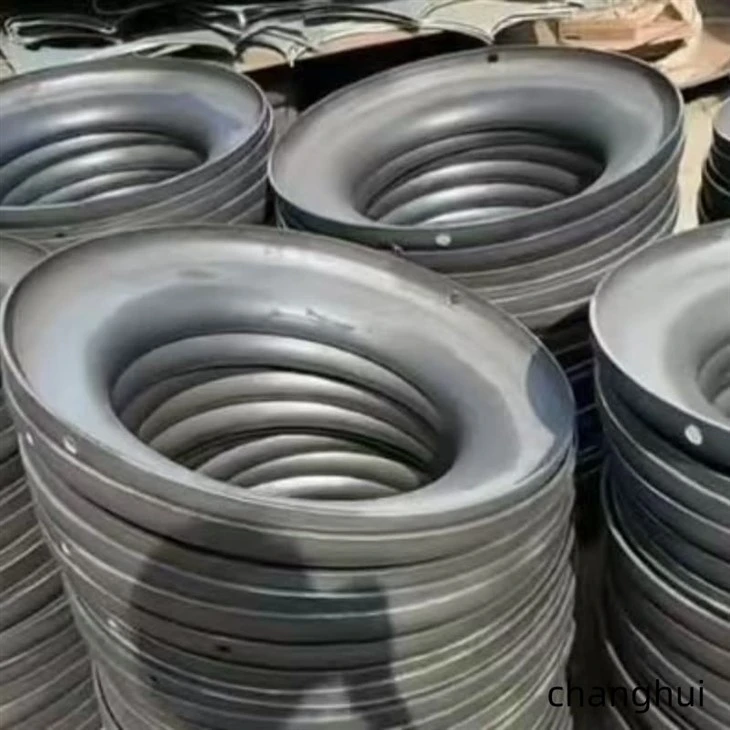
First off, let's talk a bit about Dished Heads. They're used in a wide range of industries, from oil and gas to food processing. Dished heads are basically curved ends that are welded onto the body of a tank or pressure vessel. They come in different shapes and sizes, like spherical, ellipsoidal, and torispherical.
Heat treatment is an important process for dished heads. It helps to improve the mechanical properties of the material, such as hardness, strength, and toughness. But if not done right, it can also cause warping. Warping happens when the metal expands and contracts unevenly during the heating and cooling process. This can result in a distorted shape, which is a big no - no when you're working on high - quality products.
Factors Contributing to Dished Head Warping
There are several factors that can contribute to dished head warping during heat treatment.
One of the main factors is the heating rate. If you heat the dished head too quickly, the outer layers of the metal will expand faster than the inner layers. This creates a stress differential, which can lead to warping. Similarly, if you cool the head too quickly, the outer layers will contract faster, also causing stress and warping.
The initial condition of the dished head also matters. For example, if there are any pre - existing stresses in the material due to the forming process (like rolling or stamping), these stresses can be released during heat treatment and cause warping.
The size and thickness of the dished head play a role as well. Larger and thicker heads are more prone to warping because it's harder to achieve a uniform temperature distribution throughout the material during heating and cooling.
Preventive Measures
1. Control the Heating and Cooling Rates
Controlling the heating and cooling rates is crucial to prevent warping. When heating the dished head, it's best to use a slow and steady heating rate. This allows the heat to penetrate the material evenly, reducing the stress differential between the outer and inner layers.
For instance, you can use a furnace with a temperature - control system. Set the furnace to heat the head at a rate of about 100 - 150°F per hour. This might seem slow, but it really helps to ensure uniform heating.
As for cooling, you also want to be gentle. Instead of quenching the head in water or oil, which can cause rapid cooling, you can use air cooling. Air cooling is a much slower process and reduces the risk of warping. If you need a faster cooling rate for some reason, you can use a controlled - rate cooling process, where you gradually decrease the cooling rate over time.
2. Pre - stress Relief
As I mentioned earlier, pre - existing stresses in the dished head can cause warping during heat treatment. To get rid of these stresses, you can perform a pre - stress relief process before the main heat treatment.
This involves heating the dished head to a specific temperature (usually below the critical temperature of the material) and holding it there for a certain period of time. Then, you slowly cool it down. By doing this, you relax the internal stresses in the material, reducing the likelihood of warping during the subsequent heat treatment.
3. Ensure Uniform Temperature Distribution
Achieving a uniform temperature distribution throughout the dished head is essential. One way to do this is to use proper fixturing. Fixtures can hold the dished head in place during heat treatment and help to ensure that the heat is applied evenly.
You can also use multiple heating sources or fans in the furnace to circulate the hot air. This helps to minimize temperature variations within the head. For example, if you have a large dished head, you might want to place it in the center of the furnace and use several heating elements around it to ensure uniform heating.
4. Choose the Right Material and Design
The choice of material can also affect the likelihood of warping. Some materials are more prone to thermal expansion and contraction than others. When selecting a material for your dished heads, consider its thermal properties. For example, Steel Dish Heads are popular because they have relatively good thermal stability.
In terms of design, you can also make some adjustments. For instance, if possible, try to reduce the thickness variation in the dished head. A more uniform thickness will make it easier to achieve a uniform temperature distribution during heat treatment.
Case Studies
Let's take a look at a couple of real - world examples.
A customer came to us with a problem of warping in their SA516 Gr60 Heads. They were using a very fast heating rate in their heat treatment process. After analyzing the situation, we recommended that they slow down the heating rate to 120°F per hour and use air cooling instead of quenching. They followed our advice, and the warping issue was significantly reduced.
Another customer had problems with their SA516 Gr70 Heads. The dished heads had pre - existing stresses from the forming process. We suggested that they perform a pre - stress relief process before the heat treatment. Once they did that, the warping during heat treatment was almost eliminated.
Other Types of Dished Heads and Warping Prevention
It's not just the traditional dished heads we've been talking about. There are also Cone Tank Heads, which have their own unique challenges when it comes to heat treatment and warping prevention.
For cone tank heads, the shape makes it even more important to ensure uniform temperature distribution. Since the cone has a varying cross - section, the heating and cooling rates need to be carefully adjusted. You might need to use different heating and cooling techniques for the apex and the base of the cone.
Conclusion
Preventing dished head warping during heat treatment is all about controlling the heating and cooling processes, relieving pre - existing stresses, ensuring uniform temperature distribution, and choosing the right materials and designs. By following these tips, you can significantly reduce the risk of warping and produce high - quality dished heads.
If you're in the market for top - notch dished heads or have any questions about heat treatment and warping prevention, don't hesitate to reach out. We're here to help you get the best products for your needs.
References
- ASME Boiler and Pressure Vessel Code – Section VIII, Division 1.
- "Metallurgy for the Non - Metallurgist" by John D. Hunt.
- Industry - specific case studies on dished head manufacturing and heat treatment.