

Can flat tank heads be used in cryogenic applications? This is a common query that we, as a leading Flat Tank Heads supplier, often encounter from clients involved in various industries. In this blog, we will delve into the scientific and practical aspects of using flat tank heads in cryogenic settings.
Understanding Cryogenic Applications
Cryogenic applications involve extremely low temperatures, typically below -150°C (-238°F). These applications are widespread in industries such as liquefied natural gas (LNG) storage, medical research (e.g., storing biological samples in liquid nitrogen), and aerospace (for rocket fuel storage). At these low temperatures, materials behave differently compared to normal conditions. Metals can become brittle, and the mechanical properties of various components are significantly affected.
Properties of Flat Tank Heads
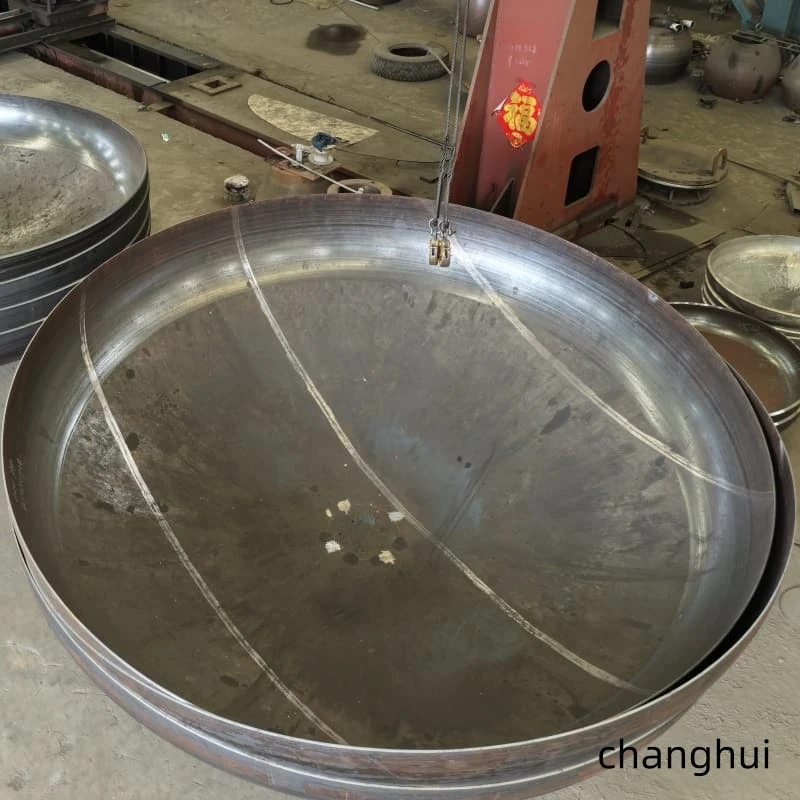
Flat tank heads are a popular choice for many traditional tank designs. They offer simplicity in manufacturing and installation, which can lead to cost savings. They are often used in applications where the pressure requirements are relatively low. Our company offers a wide range of flat tank heads, including Mild Steel Heads, which are known for their good weldability and general-purpose use.
Challenges in Cryogenic Applications
One of the main challenges of using flat tank heads in cryogenic applications is the issue of thermal stress. At low temperatures, the material contracts, and if the tank head is not designed to accommodate this contraction, it can lead to stress concentration. Unlike Spherical Tank Heads, which distribute stress more evenly due to their shape, flat tank heads have a more uniform cross - section. This can result in higher stress levels at the edges and joints, increasing the risk of cracking or failure.
Another concern is the material's ductility at cryogenic temperatures. Many common materials used for flat tank heads, such as mild steel, can experience a significant reduction in ductility. This means that they are more prone to brittle fracture under stress. For cryogenic applications, we often recommend SA516 Gr60 Heads, which are specifically designed to maintain their toughness and ductility at low temperatures.
Design Considerations for Cryogenic Use
When considering using flat tank heads in cryogenic applications, proper design is crucial. The thickness of the flat tank head needs to be carefully calculated to withstand the thermal and mechanical stresses. Reinforcement may be required at critical areas, such as the edges and the connection to the tank body.
Insulation is also an important factor. Adequate insulation can help reduce the heat transfer into the tank, minimizing the temperature gradient across the tank head and reducing thermal stress. Our Flat Bottom Tank Heads can be designed with insulation options to meet the specific requirements of cryogenic applications.
Testing and Certification
Before using flat tank heads in cryogenic applications, rigorous testing is necessary. This includes non - destructive testing (NDT) methods such as ultrasonic testing and magnetic particle testing to detect any potential defects. Additionally, the tank heads may need to undergo cryogenic performance testing to ensure they can withstand the low - temperature environment.
Certification is also an important aspect. Many cryogenic applications are subject to strict regulatory requirements, and our Steel Formed Heads are manufactured in accordance with the relevant industry standards to meet these requirements.
Case Studies
There have been successful cases where flat tank heads have been used in cryogenic applications. For example, in some small - scale LNG storage facilities, where the cost - effectiveness is a primary concern, properly designed flat tank heads have been used with proper insulation and reinforcement. These installations have shown good performance and reliability over an extended period.
Advantages of Using Flat Tank Heads in Cryogenic Applications
Despite the challenges, there are still some advantages to using flat tank heads in cryogenic applications. As mentioned earlier, the simplicity of design and manufacturing can lead to cost savings. They also offer more flexibility in terms of installation, especially in confined spaces where spherical tank heads may be difficult to fit.
Conclusion
In conclusion, flat tank heads can be used in cryogenic applications, but it requires careful consideration of the design, material selection, and testing. As a Flat Tank Heads supplier, we have the expertise and experience to provide solutions that meet the specific requirements of cryogenic applications.
If you are considering using flat tank heads in your cryogenic projects or have any questions about our products, we invite you to contact us for a procurement discussion. Our team of experts is ready to assist you in finding the best solutions for your needs.
References
- ASME Boiler and Pressure Vessel Code, Section VIII, Division 1 and 2
- API Standards for Pressure Vessels and Storage Tanks
- Cryogenic Engineering Handbook, edited by Radebaugh and Kittel